FRAMEMOG W ← BACK TO CALCULATE
BODY DEVELOPMENT GUIDE

FRAME RECOMMENDATIONS

Choose the area you want to develop. Learn what can realistically be changed through training, nutrition and posture — and what remains primarily influenced by your underlying structure and genetics.

FRAMEMOGW / GUIDE

Glutes & Lower Body

Your pelvis creates the structural base of the lower body. Training cannot widen the pelvic bones, but it can meaningfully change the muscular shape built around them.

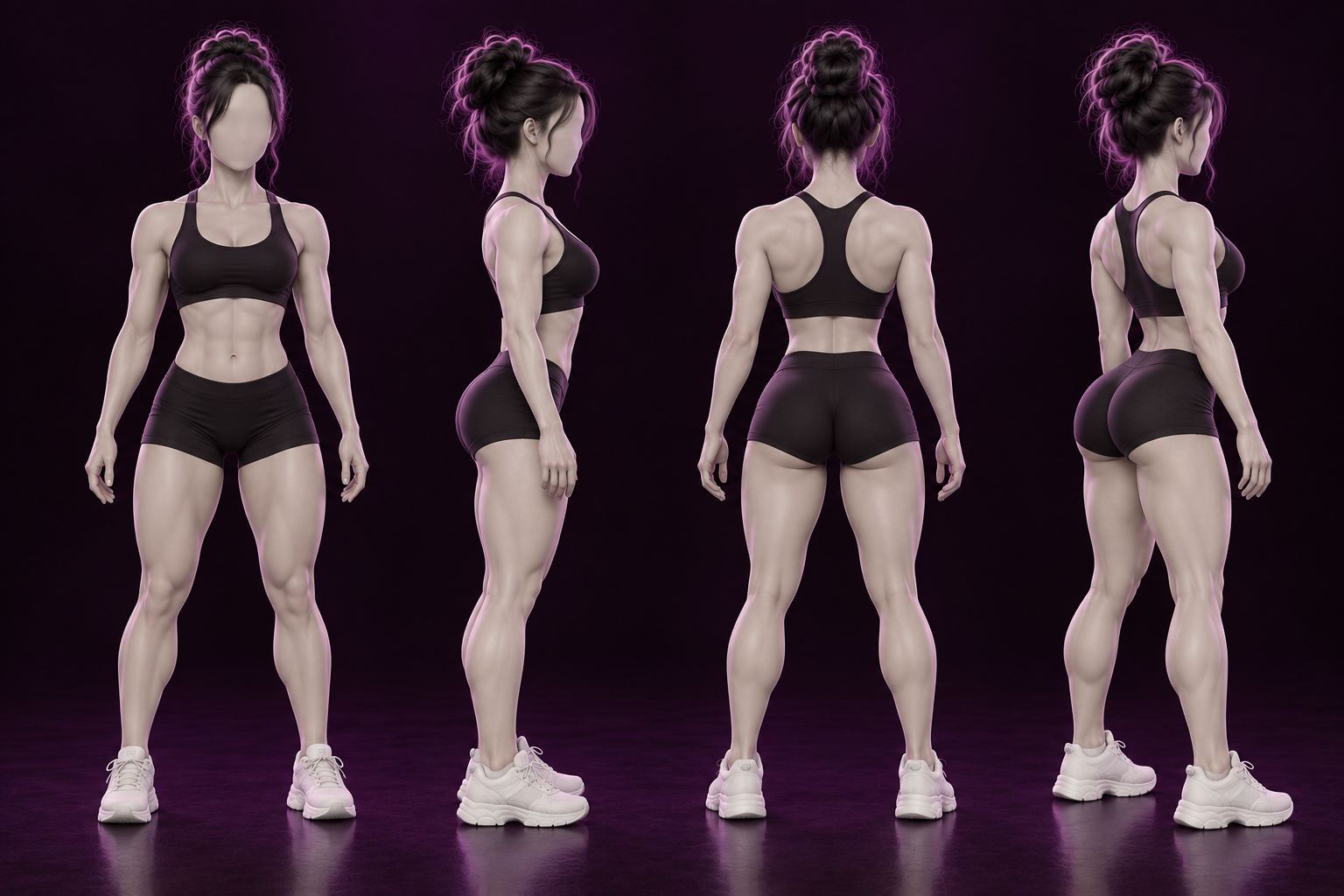
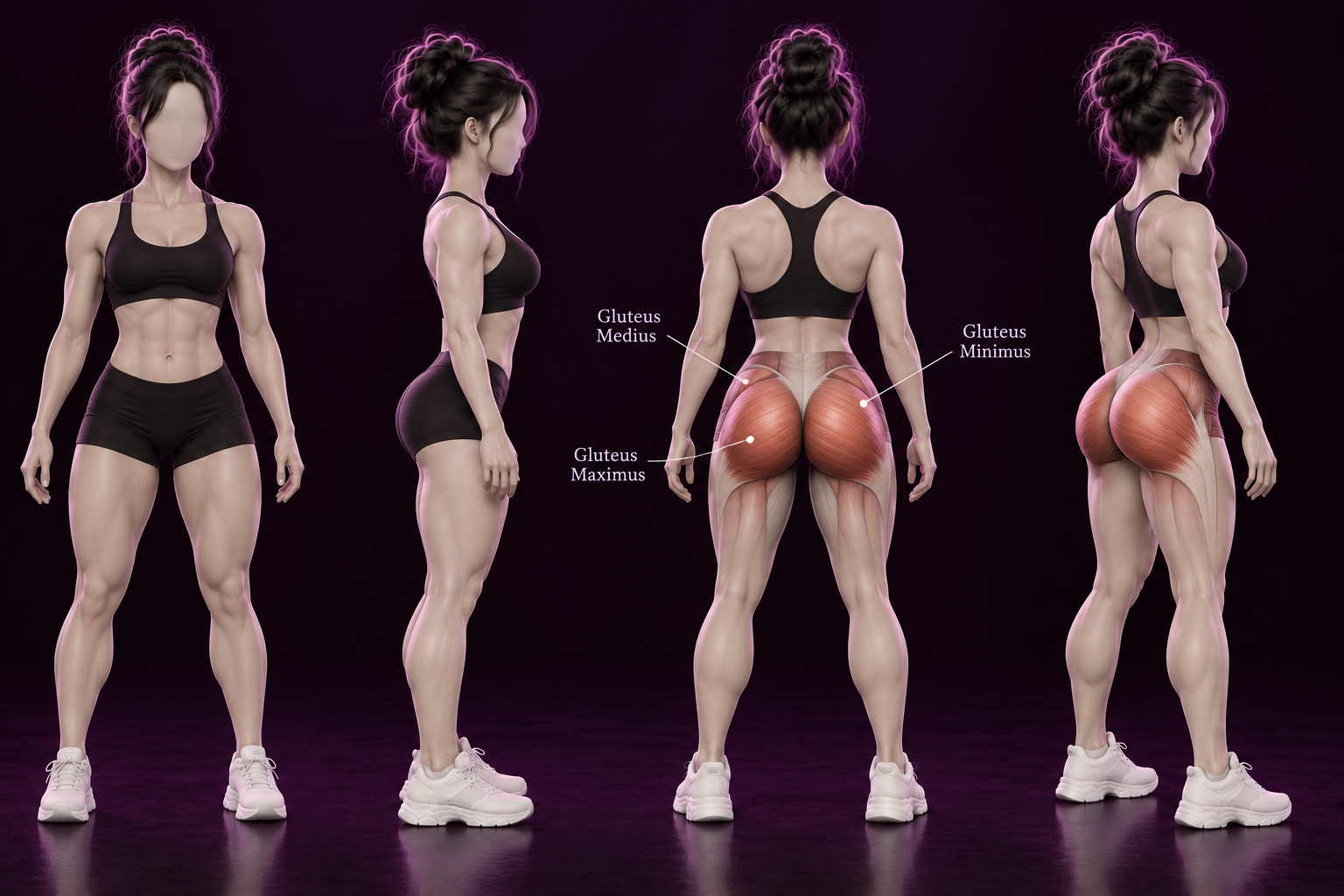
Female glute anatomy reference showing glute muscle structure
MUSCLE & STRUCTURE

The Skeleton Sets the Base. Muscle Changes the Contour.

Glute appearance is influenced by pelvic anatomy, muscle mass, fat distribution and the shape of the surrounding legs and torso.

The gluteus maximus contributes most of the visible mass and rearward projection of the glutes. The gluteus medius contributes to upper and lateral hip contour while also playing an important role in hip stability.

Hamstring and thigh development also affects how the lower body flows visually from the hips into the legs.

Exercise does not make the pelvis itself wider. It develops the muscle surrounding the structure you already have.
Build Lower-Body Shape

A complete lower-body plan benefits from combining hip-extension movements, knee-dominant movements and targeted hip-abduction work.

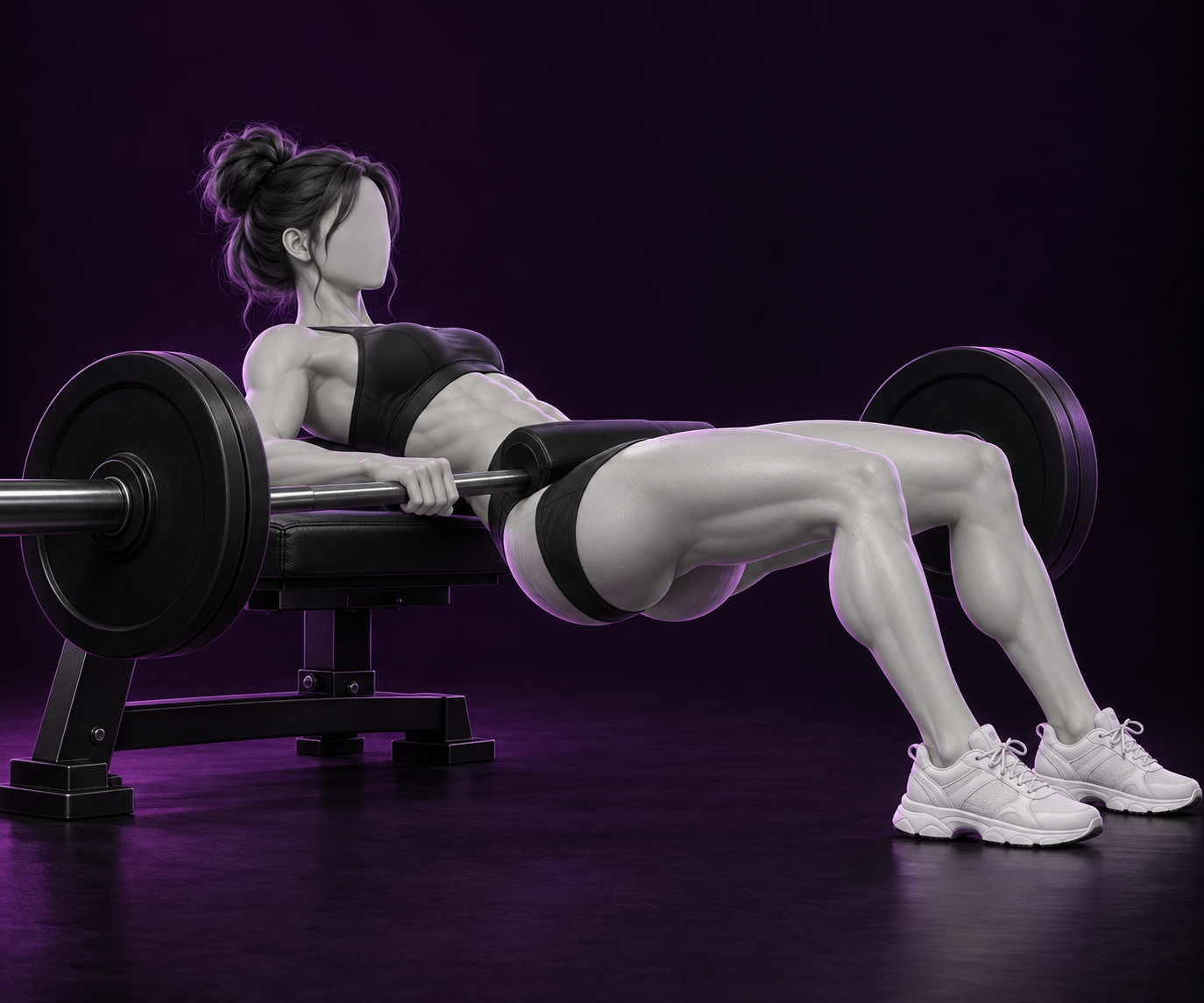
Woman demonstrating a barbell hip thrust
GLUTEUS MAXIMUS

Hip Thrust

Glute size + projection

WHAT IT DOES

Primarily trains hip extension and strongly targets the gluteus maximus, making it useful for developing glute mass and rearward projection.

HOW TO DO IT

Position your upper back against a stable bench and place the padded bar securely across the hips. Keep both feet planted, drive the hips upward, then lower under control.

KEY CUE Finish by contracting the glutes rather than excessively arching the lower back.
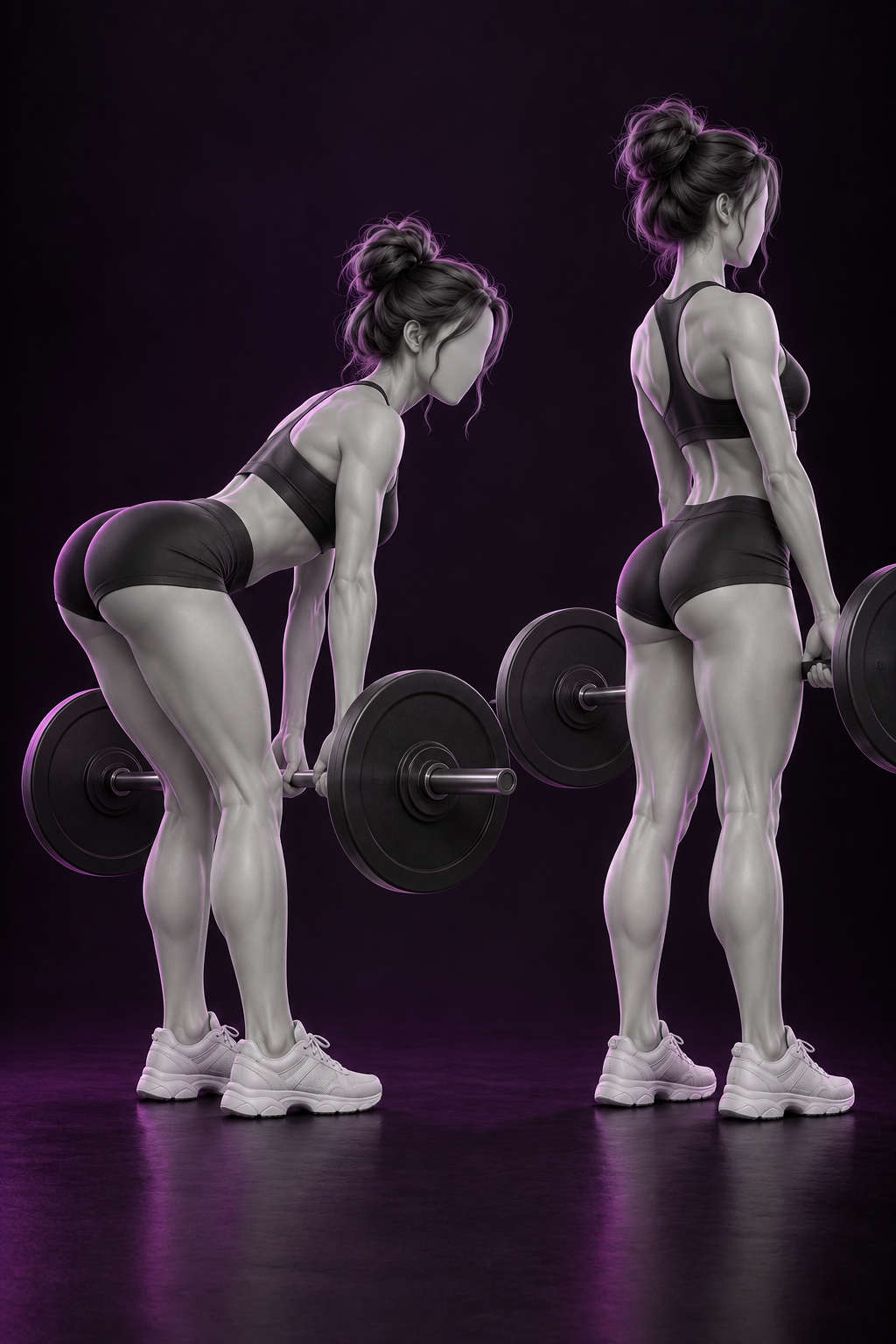
Woman demonstrating a Romanian deadlift
GLUTES / HAMSTRINGS

Romanian Deadlift

Posterior-chain development

WHAT IT DOES

Trains the glutes and hamstrings through a loaded hip hinge and helps develop the posterior chain of the lower body.

HOW TO DO IT

Hold the bar close to your thighs, keep a slight bend in the knees and push the hips backward while maintaining a controlled, neutral torso. Reverse the motion by driving the hips forward.

KEY CUE Think “hips back” rather than turning the movement into a squat.
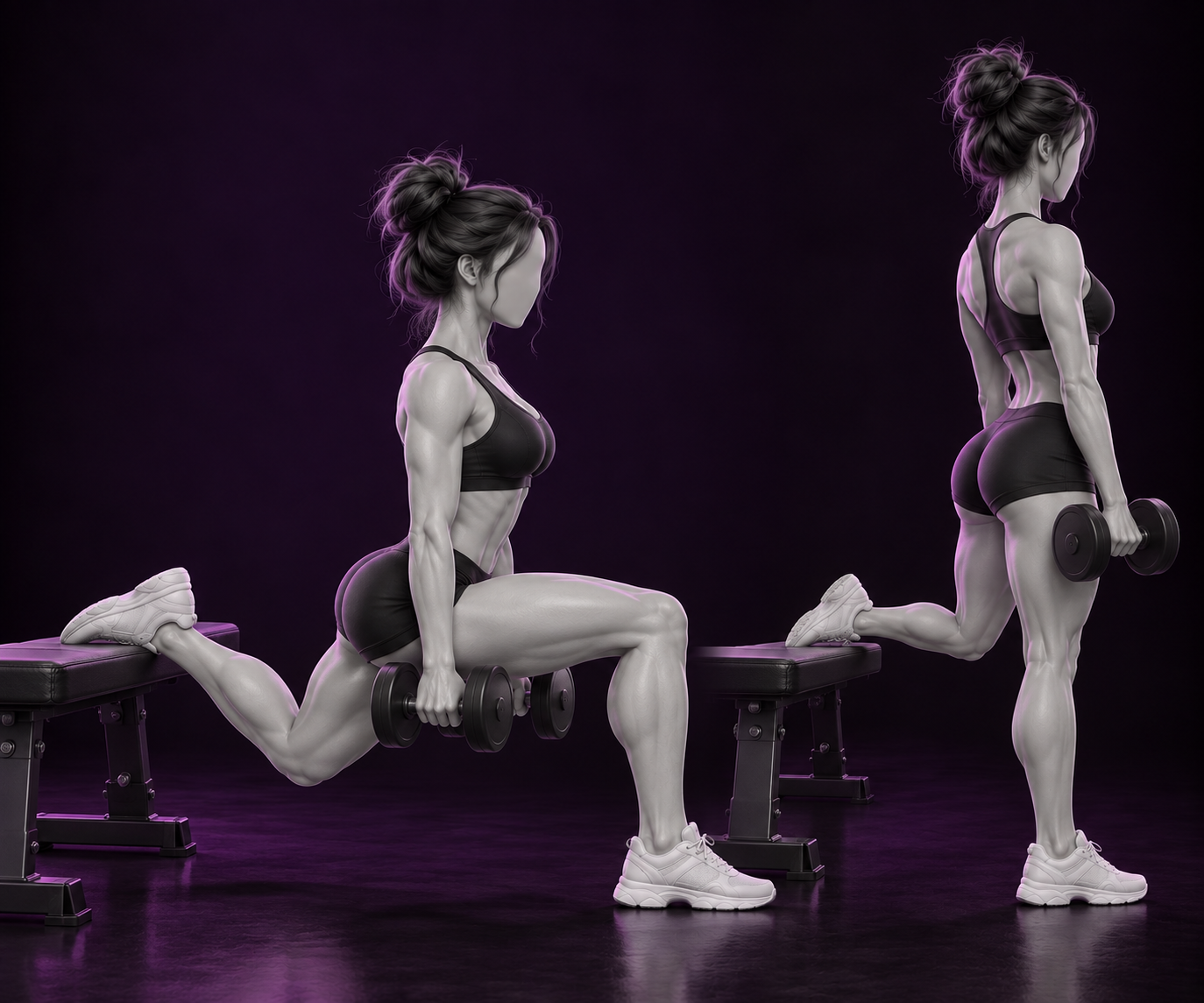
Woman demonstrating a Bulgarian split squat
GLUTES / QUADS

Bulgarian Split Squat

Unilateral lower-body development

WHAT IT DOES

Develops the glutes and quadriceps while training each leg independently, which also challenges balance and pelvic control.

HOW TO DO IT

Place the rear foot on a bench and keep the front foot firmly planted. Lower under control, then drive through the front leg to return to the starting position.

KEY CUE Keep the front foot stable and control the descent instead of dropping into the bottom.
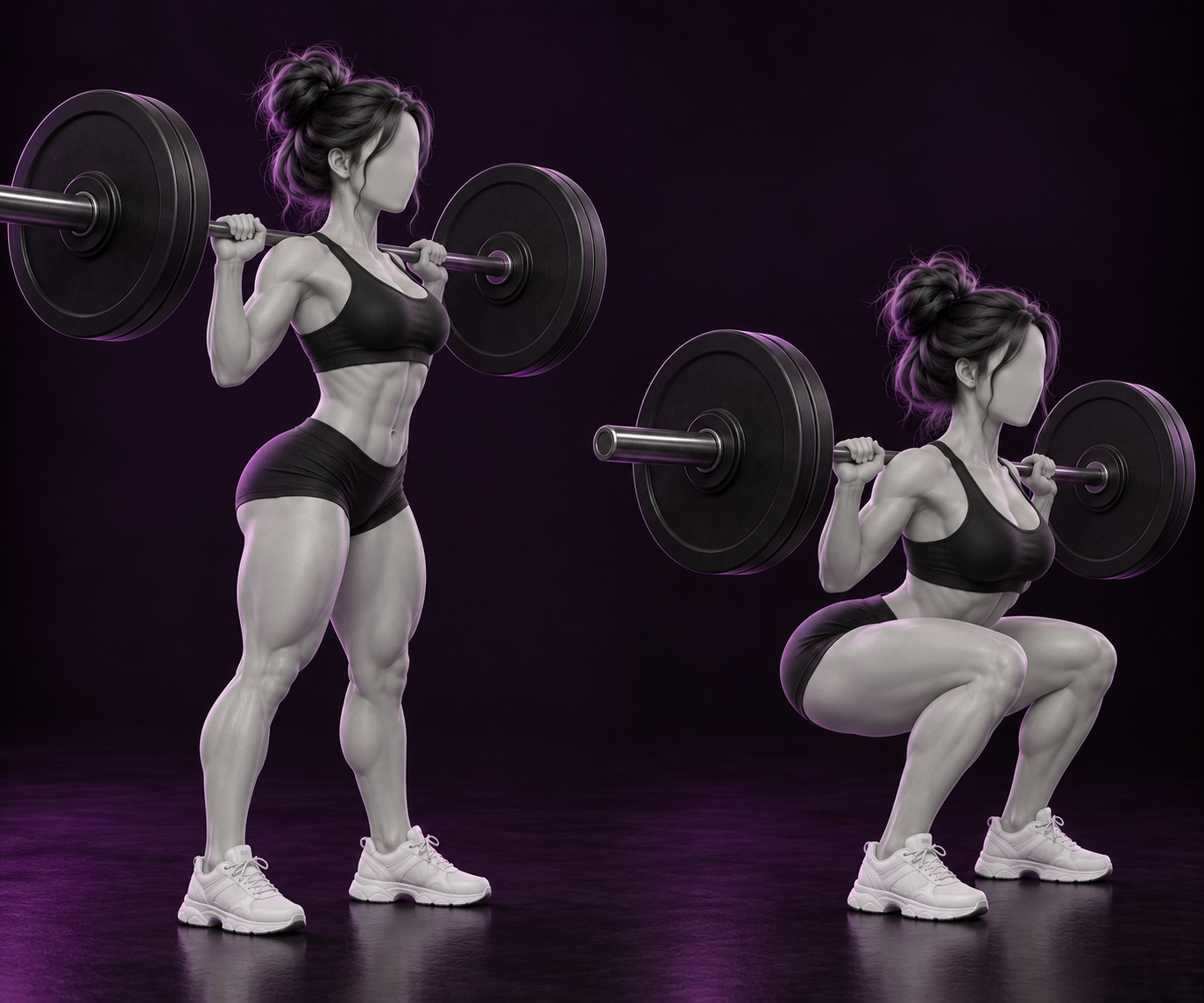
Woman demonstrating a barbell squat
LOWER BODY

Squat

Glutes + thighs + overall leg development

WHAT IT DOES

Trains the quadriceps, glutes and other lower-body musculature through coordinated hip and knee extension.

HOW TO DO IT

Brace your torso, descend under control while allowing the hips and knees to bend together, then stand by driving through the feet.

KEY CUE Keep the feet stable and let the knees track naturally in the same general direction as the toes.
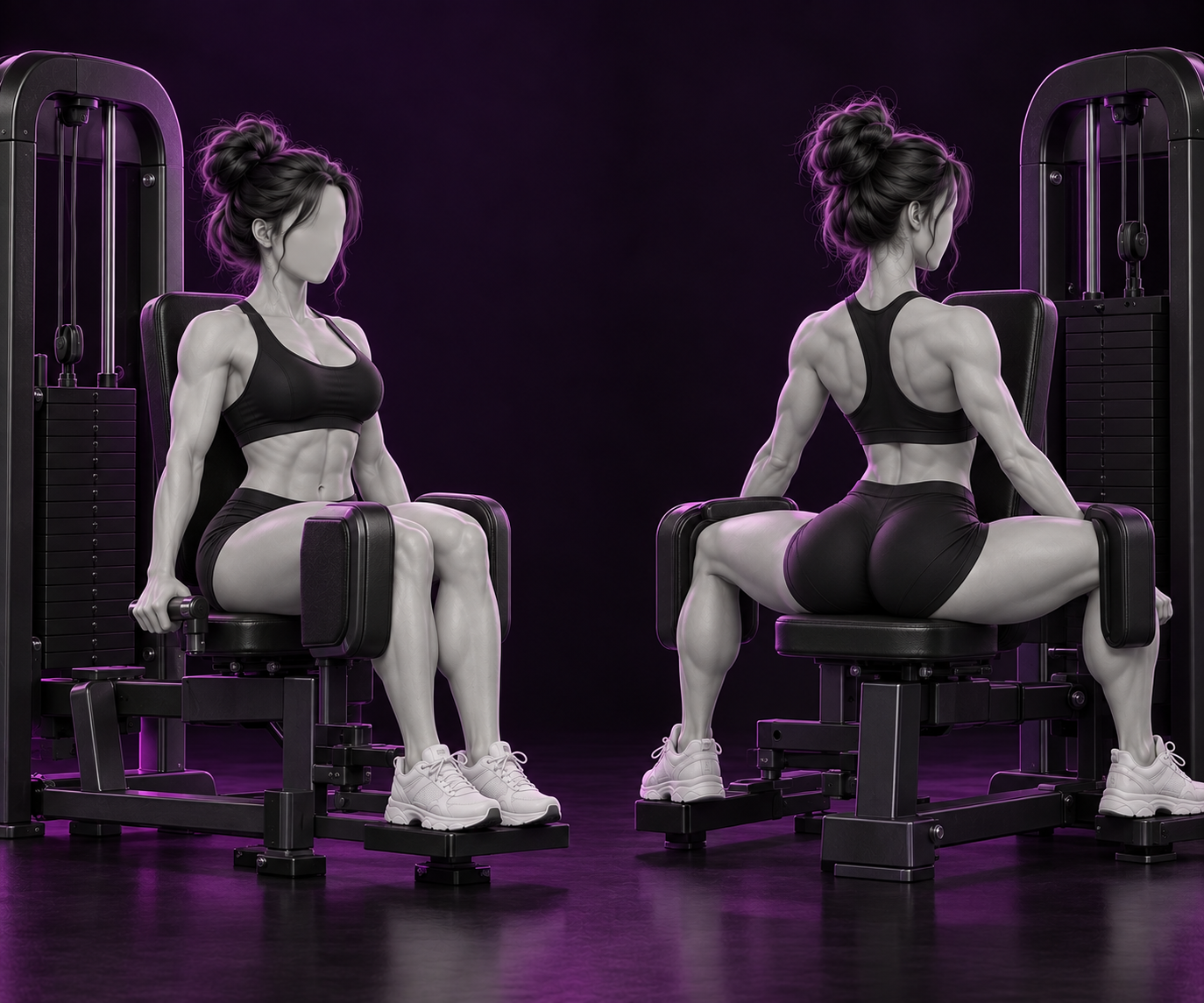
Woman demonstrating seated hip abduction
HIP ABDUCTORS

Hip Abduction

Lateral glute development + hip control

WHAT IT DOES

Trains the muscles responsible for hip abduction, including the gluteus medius and gluteus minimus. These muscles contribute to hip stability and the muscular contour around the upper outer hip.

HOW TO DO IT

Sit securely in the machine with the pads positioned against the outer thighs. Open the legs against resistance, pause briefly and return under control.

KEY CUE Keep the pelvis controlled instead of using momentum to throw the legs outward.

Hip Dips

Female hip dip anatomy reference
HIP DIPS REALITY

Anatomy Matters.

Hip dips are influenced heavily by pelvic anatomy, the position and shape of the femur, and the way muscle and fat are distributed around the hips.

Developing the glutes can change the surrounding contour and create more muscular fullness, but training cannot guarantee that hip dips will disappear completely.

Hip dips are a normal anatomical variation — not simply evidence of poor fitness.

Build the Muscle. Respect the Structure.

Training can substantially change glute size, muscular projection and lower-body shape. It cannot completely rewrite pelvic anatomy.

Waist & Body Composition

Body composition can strongly change the way your proportions look, even though the underlying skeleton remains the same.

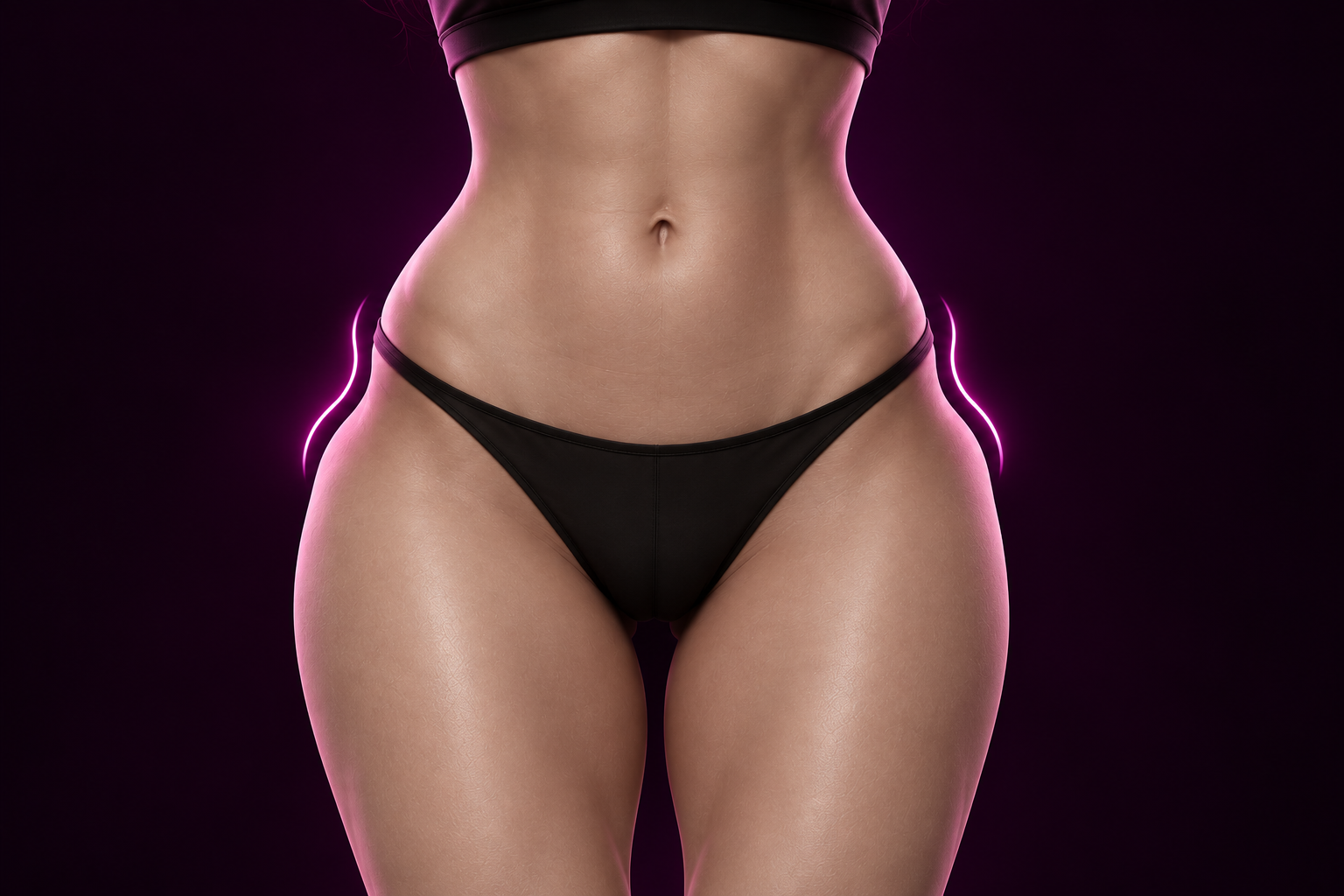
Female body composition reference
COMPOSITION VS STRUCTURE

Change the Tissue, Not the Skeleton.

Waist appearance is influenced by ribcage and pelvic structure, total body fat, genetically influenced fat distribution and the amount of muscle surrounding the torso and hips.

Losing body fat can reduce waist circumference when excess fat is present, while resistance training can preserve or build muscle that changes the overall silhouette.

Abdominal exercises do not selectively burn fat from the waist. Fat loss occurs systemically, not from one chosen body area.

What Are You Trying to Change?

Lose Fat Without Treating Muscle as Disposable

ENERGY

Moderate Calorie Deficit

Fat loss requires a sustained energy deficit. A moderate approach is generally easier to maintain and gives training, recovery and muscle retention more room than extreme restriction.

PROTEIN

Keep Protein Adequate

Adequate protein intake supports recovery and can help preserve lean mass while dieting, especially when combined with resistance training.

TRAINING

Keep Lifting

Resistance training provides a strong reason for the body to retain muscle while body weight is being reduced.

ACTIVITY

Use Cardio Strategically

Walking and cardio can increase energy expenditure and support cardiovascular fitness. They complement resistance training rather than replacing it.

Build Shape Instead of Only Chasing Scale Weight

TRAINING

Resistance Training

Progressive resistance training is the primary tool for building the muscle that changes the visible shape of the physique.

PROTEIN

Support Muscle Growth

Sufficient daily protein supports muscle protein remodeling, recovery and adaptation to training.

ENERGY

Eat Enough to Recover

Continually under-eating can limit training performance and recovery. Energy intake should match the goal rather than automatically being pushed as low as possible.

PROGRESSION

Progressive Overload

Over time, gradually increase training demand through load, repetitions, range of motion or other appropriate progression methods.

RECOVERY

Give Adaptation Time

Muscle development occurs across months and years, not a few workouts. Consistent training, sleep and adequate recovery matter more than constantly changing routines.

Nutrition Fundamentals

PROTEIN
1.4–2.2
g/kg/day

A broad sports-nutrition range commonly used for active women. Individual requirements depend on training, total energy intake and goals.

ENERGY

Match Calories to the Goal

Fat loss requires a deficit. Muscle gain requires enough energy to train and recover. Recomposition may occur around maintenance depending on training status and individual circumstances.

CARBOHYDRATES

Training Fuel

Carbohydrates contribute to total energy intake and can support performance during demanding resistance and conditioning sessions.

DIETARY FAT

Keep the Diet Balanced

Dietary fat contributes essential fatty acids, helps absorb fat-soluble vitamins and forms part of a balanced diet supporting normal physiology.

A Smaller Number on the Scale Is Not the Only Form of Progress.

Body composition can meaningfully change your waist, muscular definition and overall silhouette. It cannot change the width of your bones or completely override genetically influenced fat-distribution patterns.

Core & Posture

Core training does not shrink the bones of the waist. Its value lies in stability, trunk control, force transfer and the way you carry your body.

CONTROL BEFORE APPEARANCE

A Stronger Core Changes How You Control Your Frame.

The core includes more than the visible abdominal muscles. Effective trunk control involves the abdominal wall, spinal stabilizers, diaphragm, pelvic region and surrounding musculature working together.

Upper-back strength also matters because shoulder position and thoracic control influence how upright the torso appears.

The goal is not to “crunch your waist smaller.” It is to improve stability, control and posture.

Build Core Control

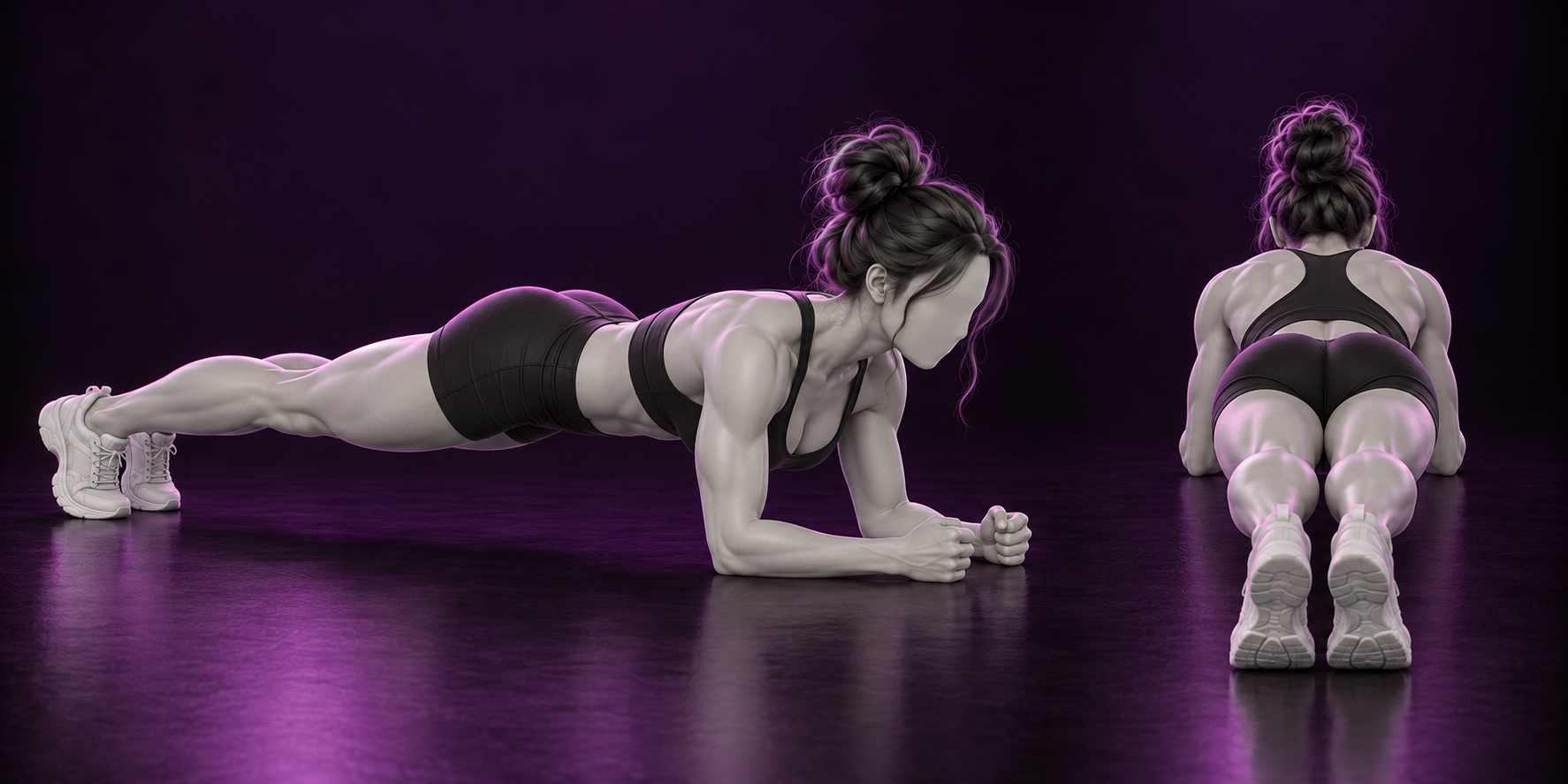
Woman demonstrating a forearm plank
CORE STABILITY

Plank

Bracing + trunk endurance

WHAT IT DOES

Trains the ability to maintain a stable torso against gravity while the shoulders, pelvis and trunk remain controlled.

HOW TO DO IT

Support your body on the forearms and toes, keep the torso long and brace the abdominal wall while maintaining a controlled pelvis.

KEY CUE Avoid letting the hips sag or pushing them excessively high.
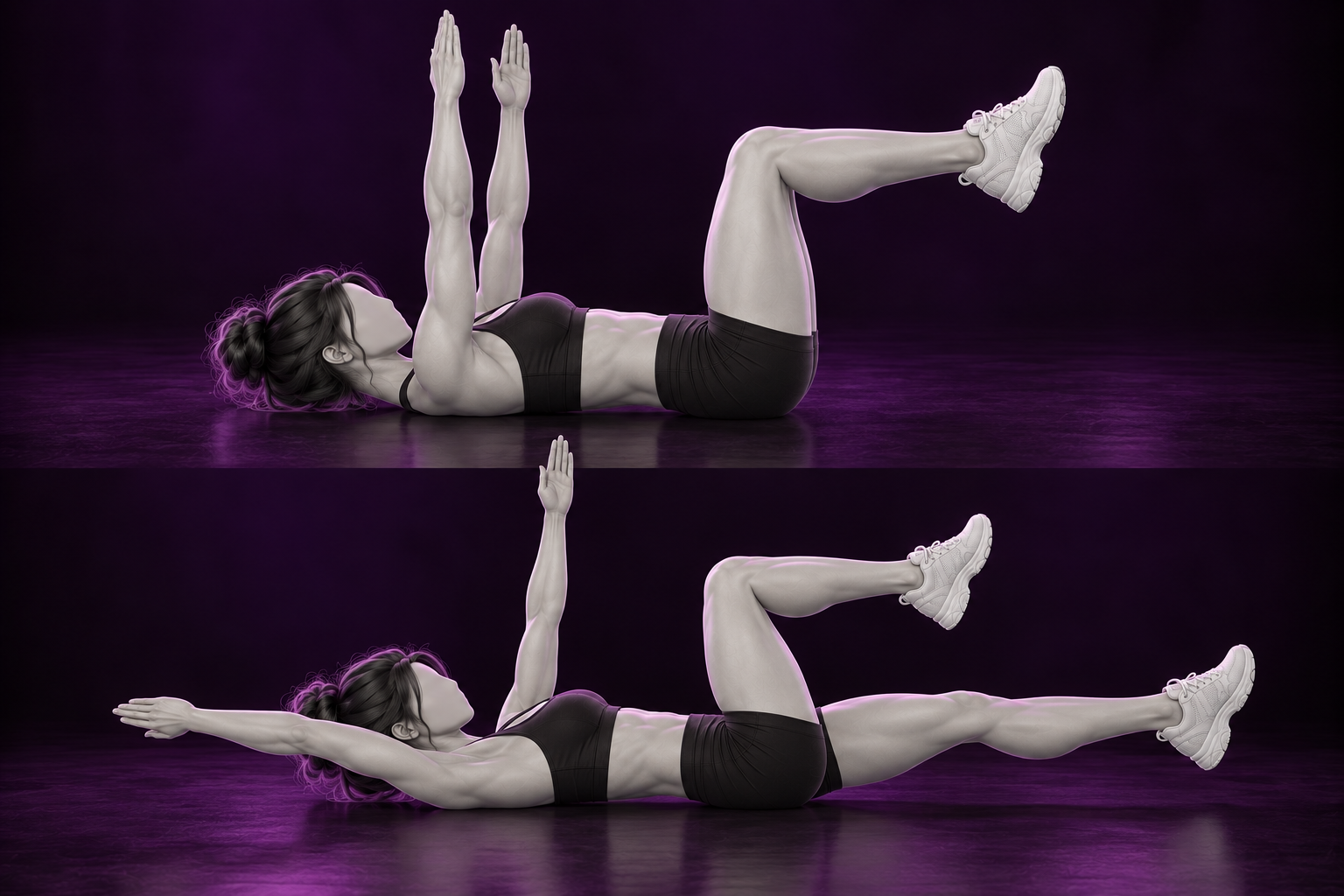
Woman demonstrating a dead bug core exercise
TRUNK CONTROL

Dead Bug

Core control + pelvic stability

WHAT IT DOES

Challenges the trunk to remain controlled while the arms and legs move independently.

HOW TO DO IT

Lie on your back with the hips and knees bent. Slowly extend one leg and the opposite arm while keeping the torso controlled, then return and alternate sides.

KEY CUE Only extend as far as you can without losing control of the pelvis and lower back.
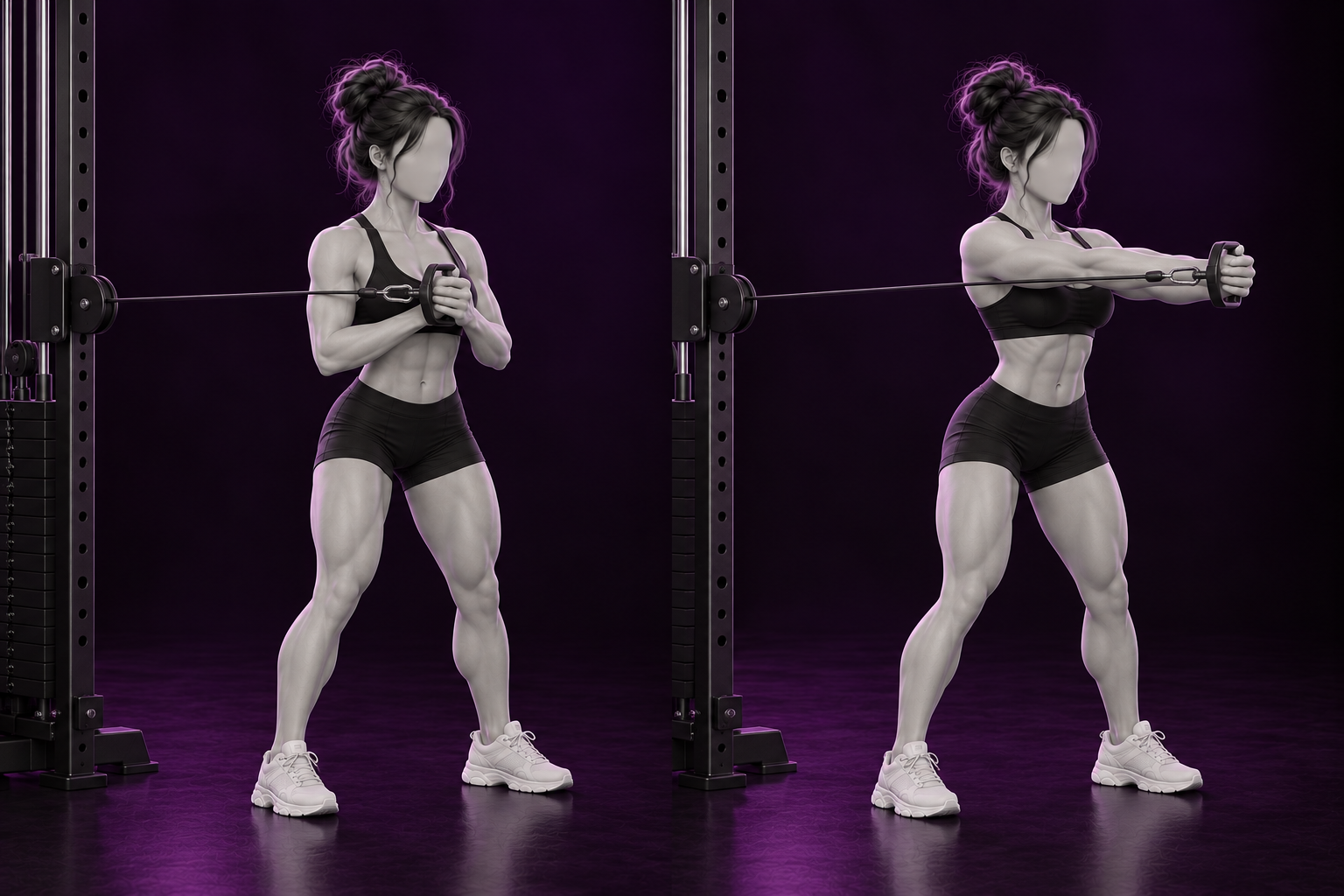
Woman demonstrating a Pallof press
ANTI-ROTATION

Pallof Press

Resist rotation + trunk stability

WHAT IT DOES

Trains the torso to resist rotational force, improving anti-rotation strength and controlled trunk positioning.

HOW TO DO IT

Stand sideways to a cable or resistance band, hold the handle near the chest and press it straight forward without allowing the torso to rotate toward the resistance.

KEY CUE Keep the ribcage and pelvis facing forward as the resistance tries to turn you.
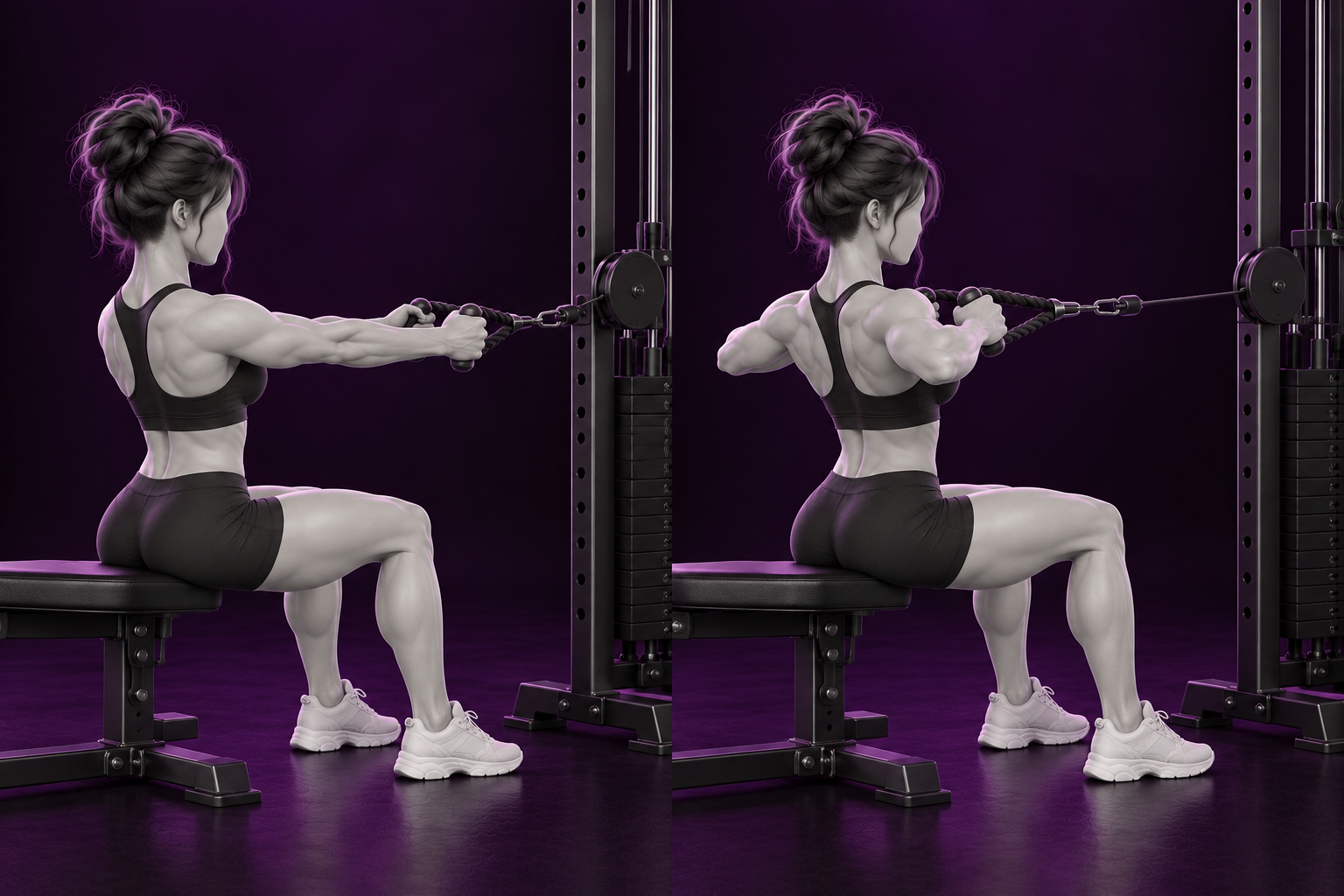
Woman demonstrating a seated posture row
UPPER BACK

Posture Row

Upper-back strength + scapular control

WHAT IT DOES

Strengthens upper-back and rear-shoulder musculature involved in controlling the shoulder blades and supporting an upright torso.

HOW TO DO IT

Sit tall, begin with the arms extended and pull the cable toward the upper torso while allowing the shoulder blades to move naturally backward. Return under control.

KEY CUE Keep the torso controlled and avoid turning the movement into a backward body swing.

Control Can Change How Your Existing Proportions Are Displayed.

Core and upper-back training can improve stability, posture and muscular development. They do not make the ribcage or pelvis structurally narrower.

Training can meaningfully change muscle size, body composition, posture and the way your proportions are displayed. It cannot completely rewrite pelvic anatomy, bone width or genetically influenced fat-distribution patterns.

The goal is not to chase a different skeleton. It is to build the strongest version of the structure you already have.
FrameMog recommendations are intended for general education, lifestyle support and entertainment purposes only. They are not medical advice. Exercise and nutrition should be adapted to individual ability, health status and goals.